Why My Grandmother Struggled to Reach the Ganga — and What It Taught Me About Design
Category:
ARTICLE
May 3, 2025
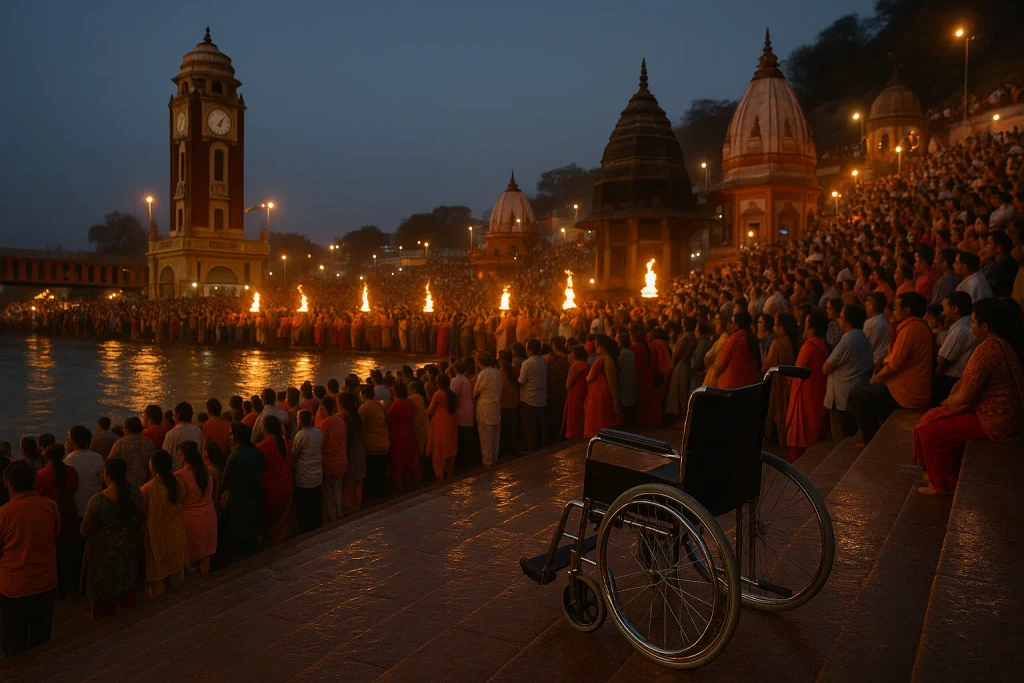
Last week, I found myself standing beside the glowing flames of the Ganga Aarti at Har Ki Pauri, in Haridwar. The sound of conch shells echoed across the river, the lamps danced in synchronized rhythm, and for a moment, time felt suspended. It was my first time witnessing this — my first dip in the sacred waters of the Ganga — and I was deeply moved. Spiritually, emotionally, and in ways I hadn’t expected.
But alongside the peace and divinity of the experience, I encountered something else too. A jarring disconnect — between what these spaces stand for and how they are designed to be experienced.
The Emotional vs the Physical Pilgrimage
I wasn’t alone. I had come with my family, including my 80+ year old grandmother, who had long held a desire to take a dip at Har Ki Pauri. The moment meant the world to her — spiritually, it was a fulfillment. But physically, it was a battle.
She had to walk long distances because vehicles are only allowed up to a certain point due to traffic congestion. From there, we navigated through crowds, markets, uneven pathways, and eventually — more than 20 stairsleading down to the water. And this was after trying, in vain, to get access to a wheelchair from the medical room, which had “closed for the day.” The stair-lift system that was supposed to support people like her wasn’t functioning either. So she walked. In pain. Slowly. With sheer determination and faith.
All I could think was — why does it have to be this hard for the people who need these spaces the most?
Accessibility is Spiritual, Too
I’m a designer. I don’t say that lightly. I observe things — not just how they look, but how they function, how they welcome or exclude. Spiritual places like Haridwar have always been envisioned as sanctuaries of peace. But if they’re not built for the elderly, for the disabled, for the slow-moving, then who are they really for?
We often associate spiritual pilgrimages with older generations. In India, it’s common to hear phrases like, “Budhape mein char dham kar lenge.” These are not just places — they’re dreams held onto for decades. So how have we not prioritized accessibility till now?
A Glimpse of What Could Be
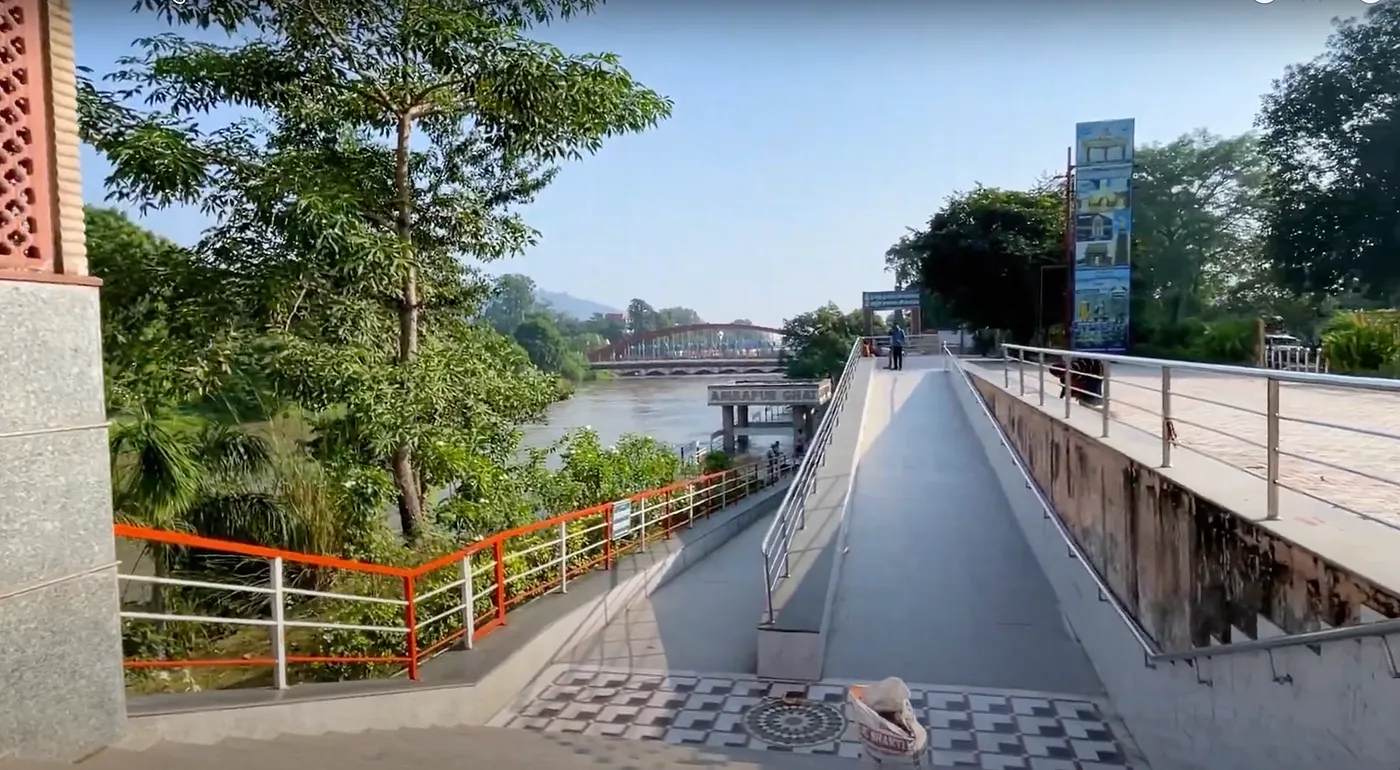
On another day, I visited Amarapur Ghat, a relatively new addition to Haridwar, built just four years ago. It had a ramp, minimal stairs, and a quiet serenity that Har Ki Pauri couldn’t offer amidst the chaos. My grandmother found it much easier to access, and I personally felt more peace there — fewer people, more room to reflect.
But when I asked her how she felt, she said:
“Asli mazza toh Har Ki Pauri pe hi hai. Yeh sab naye naye ghat thodi sahi hai.”
Translation: “The real joy is at Har Ki Pauri. These new ghats don’t feel the same.”
That hit me. Because it showed how strong the emotional weight of traditioncan be. Even when the infrastructure is kinder, it may not carry the same soul — yet that doesn’t mean we can ignore function for sentiment.
Change is Coming… But Why So Late?
I asked around. Local vendors and shopkeepers mentioned that the government is planning to redevelop parts of Har Ki Pauri to make it more accessible. That’s great news, no doubt.
But also — why now?
Is this the first time the elderly have struggled with stairs? Is this the first wheelchair request at the ghat? These are age-old pilgrimage sites. The design oversight isn’t new — it’s just long ignored.
We didn’t suddenly discover the need for inclusive design in 2025. We just didn’t prioritize it.
The Role of Design in Places of Faith
Design is not just about interfaces or visuals — it’s about systems. About shaping experiences that include, respect, and enable. Whether it’s a temple, a park, a ghat, or a mosque — if people can’t access it, they can’t connect with it. And if spiritual connection is the goal, isn’t accessibility a sacred responsibility?
As I reflect on this trip, I carry two things with me:
One, the image of the Ganga’s waters lapping softly at my feet as the sun set behind the hills.
And two, the sight of my grandmother, wincing as she climbed each step, still refusing to give up.Because faith shouldn’t hurt.
Not physically. Not because of bad design.